
Short Ram vs. Cold Air Intake: A Technical Analysis for B2B Sourcing
Executive Summary (10-Second Scan):
- What it is: High-performance induction systems (Short Ram vs. Cold Air Intake).
- Problem Solved: Balancing Intake Air Temperature (IAT) management with throttle response and volumetric efficiency.
- Target Platforms: Premium European platforms (VAG, BBA), optimized for Stage 1 to Stage 3 tuning.
- Manufacturing Standard: T6061 aluminum, precision TIG welding, and 1:1 OE-standard fitment.
1. Thermodynamic Differentials & IAT Stability
The core differentiator in the short ram vs. cold air intake architecture is the air charge source and its impact on thermal stability.
- Short Ram Intake (SRI): Draws air directly from the engine bay. It offers the shortest path to the throttle body but suffers from higher ambient heat.
- Cold Air Intake (CAI): Relocates the filtration media outside the engine bay. Based on the Ideal Gas Law, this delivers lower temperatures and higher air density.
Performance Impact: For modern VAG and BBA platforms, maintaining a low Intake Air Temperature (IAT) is critical. In the technical comparison of short ram vs. cold air intake, a CAI prevents the ECU from retarding ignition timing due to heat soak, ensuring consistent horsepower during sustained high-load operations.

2. Fluid Dynamics & Torque Curve Management
Intake geometry in a short ram vs. cold air intake setup directly dictates fluid Inertia and the engine’s torque delivery characteristics:
- CAI (Low-to-Mid Range Torque): Longer piping creates a larger air column. Once in motion, this inertia creates a “resonant charging effect,” actively forcing more air into the cylinders.
- SRI (High-RPM Response): Minimizes the distance to the Internal combustion engine. The reduced frictional drag makes it the preferred setup for drag racing and scenarios demanding transient, instantaneous throttle response.
3. R&D Case Study: BMW S58 Front Mount Relocation
Standard setups for the BMW S58 often force a compromise in the short ram vs. cold air intake decision between severe heat soak and excessive restriction.
- Our Engineering Solution: The “Hybrid CAI” Front Mount system.
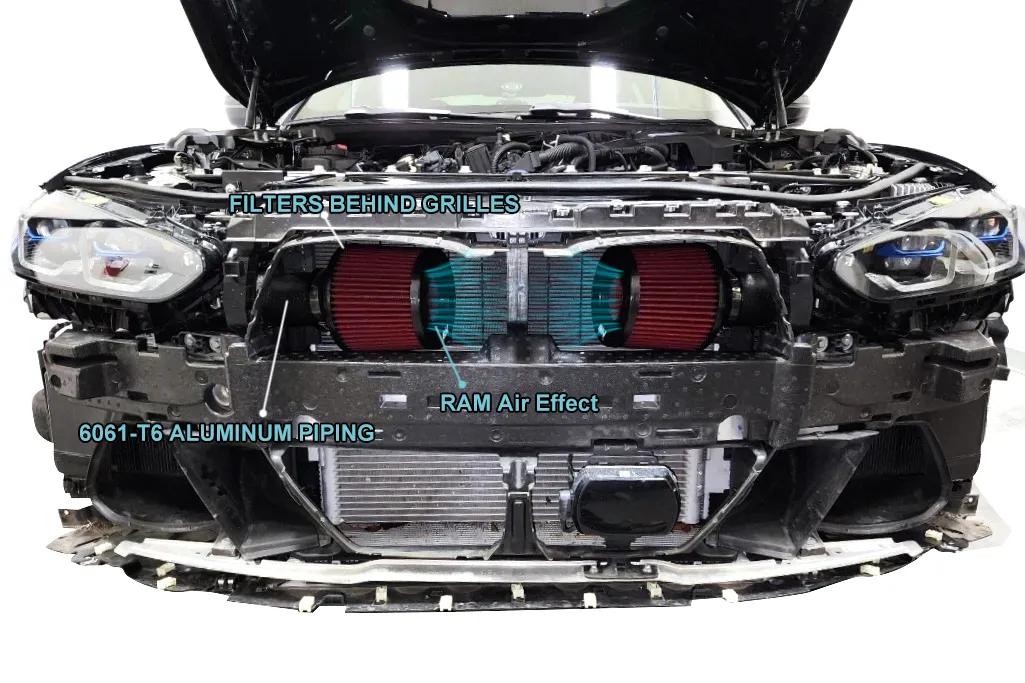
- R&D Capabilities: Utilizing industrial 3D scanning and industrial-grade 3D printed prototypes, we engineered a system that repositions the filters directly behind the kidney grilles.
- Build Quality: Manufactured from T6061 mandrel-bent aluminum with precision TIG welding, guaranteeing a 1:1 direct fit.
- Technical Result: This architecture bypasses the heat-soaked bay entirely to deliver a true “RAM air” effect, maximizing volumetric efficiency without the common fitment issues found in standard short ram vs. cold air intake products.

4. Environmental Reliability & After-Sales Cost
For B2B distributors, recommending the right short ram vs. cold air intake reduces warranty claims and after-sales friction.
- Hydro-lock Risk: Because CAI filters sit lower to the ground, they carry a higher risk of water ingestion in wet climates.
- Maintenance & Turnover: An SRI is inherently safer in harsh environments and offers faster, easier installation. For wholesale distribution, the SRI represents a low-risk, fast-moving SKU, while the CAI (or Front Mount) remains a premium solution for professional racing builds and high-margin service tickets.
5. Manufacturing Specifications for Wholesale
When sourcing short ram vs. cold air intake systems from our facility, we guarantee the following industrial standards:
- Material: Lightweight T6061-T6 Aluminum (not thin-wall plastic).
- Bending: CNC Mandrel-bent piping for consistent internal diameter.
- Coating: High-temp powder coating (custom colors available for bulk orders).
- QC: Pressure tested for air-leakage and sensor bung alignment.
6. Strategic Inventory Logic for Tuning Shops
To optimize inventory turnover and cater to diverse client needs regarding short ram vs. cold air intake, we recommend:
- SRI Strategy (High Volume): Stock for budget-conscious builds, entry-level tuning, and customers prioritizing induction sound.
- CAI Strategy (High Margin): Reserve for Stage 2/3 technical builds where rigorous IAT management is the primary bottleneck.
Conclusion
The short ram vs. cold air intake debate is a calculated trade-off between raw response and thermal stability. Offering both architectures allows distributors to capture the entire market—from street enthusiasts to professional track teams—with reliable, factory-direct engineering.
Ready to upgrade your inventory? Return to our B2B Strategic Hub Cold Air Intake B2B Guideub to review our latest VAG/BBA application list, exact lead times, and wholesale pricing tiers.