
Technical Resource Hub
Cold Air Intake B2B Guide
This cold air intake b2b guide serves as a technical reference for high-performance automotive parts distribution. We provide data-driven insights into engineering standards, sourcing logistics, and inventory optimization for the 2026 aftermarket industry.
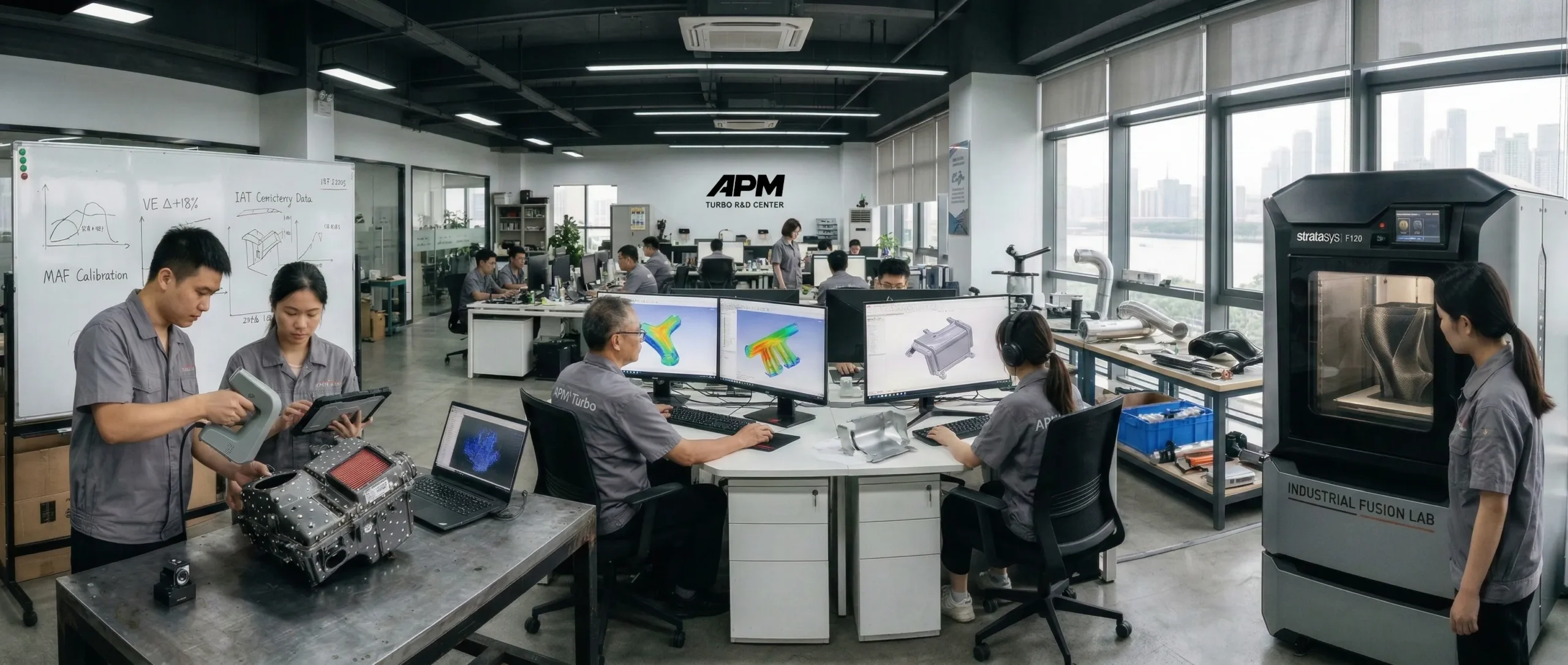
Stock Airbox Restriction and Volumetric Efficiency
The primary objective of this cold air intake b2b guide is to address the limitations of factory-installed induction systems. OEM airboxes are designed for NVH reduction rather than flow optimization. For professional distributors, understanding the relationship between intake restriction and Volumetric Efficiency is essential for inventory selection. Aftermarket systems utilize mandrel-bent piping to minimize internal turbulence, directly impacting throttle response and high-RPM power output.
Article
Stock vs. Cold Air Intake →
Comparative analysis of pressure drops and induction dynamics in factory vs. performance systems.
Article
Air Filter vs. Intake System →
Evaluation of filtration surface area and flow velocity in drop-in filters vs. full intake induction.
Technical Sales Support
Warranty Risk Management and MAF Sensor Calibration
Operational profitability in the cold air intake b2b guide framework depends on minimizing post-sale warranty claims. Mass Air Flow (MAF) sensor failures are the most common cause of returns in the intake category. High-precision manufacturing ensures that the internal diameter (ID) of the intake tube remains consistent with ECU calibration, preventing fuel trim errors and Check Engine Lights. Sourcing hardware with CNC-machined sensor bungs is a critical step in maintaining brand reputation and low return rates for e-commerce retailers.
Article
Dry vs. Oiled Media →
Analysis of filtration media impact on sensor longevity and maintenance requirements.
Article
Aluminum vs. Plastic →
Material analysis regarding heat-cycling stability and structural integrity in high-temperature engine bays.
Reliability Data Sheet
Thermodynamics and Intake Air Temperature (IAT) Consistency
The technical core of the cold air intake b2b guide involves managing Intake Air Temperatures. For high-performance tuning, consistency is the primary metric of success. Poorly isolated intake designs draw in radiant engine heat, leading to ignition timing retardation by the ECU. Professional-grade cold air intakes prioritize thermal isolation, ensuring a dense air charge throughout multiple dyno pulls or track sessions. This segment provides the engineering proof required for professional tuning facilities to make informed purchasing decisions.
Article
Short Ram vs. Cold Air Intake →
Thermodynamic study on heat-soak management and air density outcomes.
Article
Ram Air vs. Cold Air Intake →
Physics of air velocity and high-RPM induction efficiency.
Engineering Proof